Friday, October 24, 2025

Here's to the rest of our Fall 2025 semester together!🫶🥳✨

First and foremost, I really enjoyed again getting a little peek at capstone proposals from past YDEV-ers and most specifically, would have loveloveLOVED the chance to see what came to fruition following April Wilson Samuels' Beyond Goodbyes: Nurturing Tomorrow's Resilience - A Case Study on Friends Way and Innovative Strategies for Youth Grief Support beautifully created powerpoint. 

Additionally taking time to scroll, skim, and scan our entire course's slide deck so far was a fun stroll down memory lane; I really got to reflect on week one feeling as if it were yesterday, recollect how incredibly excited I got whenever I realized we'd be collectively taking on each of our own capstones, and reminisce on every other step we've taken since. (I even found the snack sign up sheet that I missed when my little sister decided to go on and have a stroke oops LOL I can jokingly say something like this now but I promise you that was and forever will be one of the scariest moments of my entire life).

When moving on and rereading previous blog posts, I still feel as if I would like my influence to be with queer, trans, BIPOC youth and that "I am [still] nervous at the thought of wanting to make the right choices, wishing to ask all the right questions, and hoping to turn in the right capstone." I too still feel as if Potential Plan A is making me the most curious of the options I've previously touched upon (P.P.A was where my research question would be "From the perspective of youth within the 2SLGBTQIA+ community and at a time like our current political climate, what are the most prevalent forms of 1. crises, 2. coping mechanisms, and 3. creative forms of resistance/resolution/restoration/reparation?" while utilizing qualitative research; tools ranging from 1:1 interview, group interviews, and anonymous questions/surveys to focus group discussions, observations, and creative art submission; and methods including examination, analysis, anecdotes, visualizations, etc.)

I don't believe I ever included it in that one blogpost or any others since (I actually don't even think I discussed it outside of with my spouse like once lmao) but the only other idea that felt anywhere near as exciting was taking tons of inspiration directly from two recent readings of mine (Subini Annamma's Mapping Consequential Geographies in the Carceral State: Education Journey Mapping as a Qualitative Method with Girls of Color with Dis/abilities and Elijah Edelman's Trans Vitalities: Mapping Ethnographies of Trans Social and Political Coalitions). And in doing so, I'd collaboratively create/study/explore Educational Journey Maps like Annamma (or even just the more standard concept of a traditional map like Edelman) with queer, trans, BIPOC youth who're local to Providence. Although I'd ultimately still follow a Pizza Recipe similar to the one that I exemplified within P.P.A, I'd in this case place a lot less focus on the current state of the world and much more emphasis on the art that would be created.

For me (no matter what way I try to look at it) both of the aforementioned ideas for potential capstone plans combine, connect, and criss-cross a wide range of personal and professional passions of mine; at the very same time they too could come together at a perfect intersection of incorporating, elaborating, exemplifying, and even uplifting every last one one of our five YDEV anchors.


💛

B

Saturday, October 18, 2025

Is this really about to be my last blogpost?!

     All in all, I thoroughly enjoyed reading Eve Tuck's Suspending Damage: A Letter to Communities. Not only was I granted the opportunity to learn a lot of concepts I hadn't yet crossed paths with but too, I was pushed to think critically in a way that I otherwise hadn't in quite a while. In since sitting in reflectionI remember starting the reading with an appreciation for how Tuck began the piece by setting the reader within the scene, so much so that it felt mental, physical, and as if she shared a bit of herself with the reader; I additionally noted much later in the reading appreciating Tuck's reluctance at even risking the perpetuation of the harm and hate that fills U.S history. She all along the way blasted me with these insightful bits of information and golden nuggets of knowledge that ultimately left me feeling as if she guided me on into having a great grasp on “damage-centered” research (409) versus desire-based research (416) versus denial (419) and so much more. I was particularly enlightened when Tuck delved into how researchers often double as yet another layer of surveillance (410) for disenfranchised communities; giving me much professional perspective into how I must proactively navigate the research that will drive my up-and-coming capstone with the utmost levels of care and empathy. On a more personal note, I was introspectively moved where Tuck touched upon the long-term repercussions of thinking of ourselves as broken (409); as well as later on page 421 where she explains, "Existing research on the GED positioned it as a depleted credential, ineffective in getting its recipients through college or fully employed. Yet, at the same time, studies reported ever-increasing numbers of youth across the United States and especially in New York City flocking to the GED rather than a high school diploma." The latter resonated in the context of how these clauses seem to continue to be the case within my own experiences supporting similarly aged youth, through the lens of the incredible research that the Collective of Researchers on Educational Disappointment and Desire (CREDD) had come up with, and later with the questions of how the research would look like in 2025 (instead of 2009) or in other cities outside of NYC (perhaps Providence). 

    Moreover, and similar to my last blogpost, some of the other questions the reading of Suspending Damage raised and that I randomly noted throughout were as follows: What is an International Polar Year and when is the next one (410)? What would be the outcome of conducting research within my own community, will any potential benefit outweigh any potential cost, and what questions should I ask myself beforehand (410)? How do I convey the very necessary respect and urgency at the same time as integrity and celebration when interviewing folks who experience extreme marginalization outside of the blips of identities that I may share with them (410)? What would/could/should a present-day apology from the United States to all of its victims look like (411)? Why do I feel as if I've never seen a citation like the following, (personal communication, April 2008) which was on page 415, and is it actually just the traditional norms/dominant culture/white supremacy that has been instilled into so many of my educational experiences that leads to me to question how it could be cited as a reference, or considered data? Could there be a connection made between page 415's Without the context of racism and colonization, all we’re left with is the damage, and this makes our stories vulnerable to pathologizing analyses (Kelley, 1997) AND the small bit of discussion held in class on 10/16 where Lesley was placing emphasis on gathering and incorporating context into our capstones (because I believe I may have made one lol)? Who in the world is Margaret Mead (416)? And who else thought Craig Gingrich-Philbrook's demonstration of advertisement[s] of power, explanation behind his decision to depict same sex [...] intimacy and desire, and juxtaposition from queer bruises and broken bones to queer kiss[es] and love to be a powerful way to deepen the understanding of damage-centered (or deficit-based) research?

    Anyhow and as always, I must first thank whoever took time out of their day to read any ounce of my ramblings and second share how grateful I am to have been able to subsequently follow this sort of work up with reading throughout (and interacting with) that of my peers' all semester so far. GO YDEV 560! <3

Saturday, October 11, 2025

"From test score to measure of learning to measure of teaching to rank; From test score to measure of learning of risk of failure of death"

    It's been a long week, my brain's battery is low, and my body's battery is even lower so although I may not know where to most presently find the words for how much I loved reading the assigned chapter of Restler's What Do You Do That Can't Be Measured? On Radical Care and Teaching, please believe me when I stress just how much I seriously loved reading it. The undeniably important "what" it was all written about; the "why", the "who", the "where", the "how"- separated by methodology, tied together with bits of poetry, and laced with anecdotes beautiful enough to surpass setting the scene. Not only did I find myself reading certain points right in Victoria's voice (simultaneously realizing how much she is missed throughout my YDEV studies this time around) but I also thoroughly enjoyed taking a moment in between (and again afterwards) to poke around the collection of art that was received in response to the titular question. I am choosing to later end the blogpost with a screenshotted blip of just a few of my favorites but I promise there were so many more masterpieces than I have space to share so I encourage everyone to check them out if/when they get the chance. Anyhow, I really wish I could have seen if the Valued-Added Measurement's color-coded rankings were as ass-backwards as they seemed and I also think I need to figure out a way to read the rest of this book LOL

    Moreover, Lesley first posed "what does this Restler chapter raise for you?" and this inspired me to jot down all of the questions that were raised as I read on and took notes. Now I will refrain from copying over everything but of the questions that the chapter did raise for me were... How can I begin my capstone by directly placing (or even indirectly comforting) the reader the way that Restler has? What are some of the tools to use to provoke thoughts or mental images that could resonate a lifetime? Are there similar groups or spaces to NYCoRe and ItAGS here in Providence? Is there anyone else who would like to see what came out of Restler's rubbings of Betty's math classroom? Can we determine where in history it was when all of the magic that a teacher does was first ever equated to that of nothing but value-less work (and how could they have ever been so wrong)? Why was this the first time I have ever heard of "Echolalia"? Who thought the Chicago Public Schools' 2009 "Culture of Calm" Program was a good idea? And how about any of our country's "theoretical and methodological leaps necessary to create and maintain a centuries-long market of humans" (Restler, 2023, p. 14)?! In one way or another, I am sure we are all aware of just how shitty our world is but every now and then, somethings just sit heavier than others, you know? (For instance: the story of Rigoberto Ruelas).

    Anyhow, after finishing the chapter reading and spending a little time reflecting on how it may help me view myself and others- I next took an introspective deep dive into thinking up all of what I do that cannot be measured. I first jotted down how my love, empathy, and compassion could never be measured; and then the endless amount of hugs, high-fives, handshakes, fist-bumps, smiles, jokes, and fits of laughter came to mind. I know no one could ever measure the beauty of collaboration, imagination, connection, change; nor can they measure shared meals, games played, memories made, songs sung, and the deep impact of simply being made to feel safe. Last but certainly not least (although it is professional work like ours that is too often deemed socially less than others)- what's more immeasurable than ever are my active efforts at honoring the whole human that makes up every young person, celebrating each facet of all their intersecting identities, and not only helping youth envision a world that best meets their needs but too holding them up while they build it. 


    Before I go, I must thank anyone who took some time to read my thoughts today and if anyone else has also taken a look into the art that was collected as a result of this work, please share: what was/were your favorite/favorites?! 

Thursday, October 2, 2025

Idk, what ~can~ I learn in an hour or two?!

Although I much rather have been in class with everyone this evening (like it seriously has felt SO weird going two Thursdays in a row without meeting)- I still took tonight to first poke around what easy online breakdowns I can find on Qualitative versus Quantitative research, second read through Bogdan and Biklen's Qualitative Research for Education: An Introduction to Theory and Methods, and third take a look at the way some of my peers may have compared and contrasted the two from their own perspectives. Of the videos I viewed, I have incorporated a few and what I took from each below.

Scribbr's Quantitative vs. Qualitative Research: The Differences Explained

  • Quantitative is used to test hypotheses while Qualitative is used to formulate them.
  • Quantitative usually utilizes larger sample sizes while Qualitative uses smaller ones.
  • The mixed method/s approach is when one study utilizes methods that fall under both types of research individually.
  • Qualitative Research is descriptive and reveals themes, ideas, and beliefs while Quantitative Research poses numerical or statistical questions like "how much?" or "how often?"
  • Qualitative can look at data such as surveys, observations, and interviews as well as artifacts such as language, religion, and ethnicity, Quantitative looks to define, prove or disprove.
  • When it comes to "how the pizza is served", Qualitative research is often set into themes (with lots of writing and discussion) and Quantitative is a lot less up for interpretation (while being a lot more rigid and full of numbers).
Moreover, in reading Bogdan and Biklen's Eleven Common Questions about Qualitative Research (a.k.a the type I lean a tad more towards), I learned a lot. This includes but is not limited to the concept of generalizability/grounded theory/"whether the findings of a particular study hold up beyond the specific research subjects and the setting involved", the ways in which qualitative researchers try to avoid bias having impact on studies, reliability = the "fit between what they record as data and what actually occurs" ≠ "consistency in results of observations made by different researchers", and that neither style is better than the other.

It ended up being too long to incorporate into a blogpost but I too wanted to briefly acknowledge the excerpt's Figure 1.1 Characteristics of Qualitative and Quantitative Research (p. 39-41) because it was reading through everyone of this table's sections that gave me a much better (and more visual) grasp on many of the fundamental facets that make up each of the types (such as key concepts, goals, design, the different relationships with subjects and problems that present themselves within each approach). 

With that, I instead took this opportunity to highlight what came up via Google's AI feature earlier on in the evening and I hope it is as insightful to the reader as it was to the writer LOL xoxox byeeeeeeeee


Thursday, September 25, 2025

Brainstorming This Beautifully Stormy Thursday Away

    After taking some time combing through the ancestral capstone projects and sitting with this blogpost's correlating question, I've officially checked in with myself and I can confirm to be feeling in fact a lot of different emotions. Although I would say a "sort of" to stress and a resounding "yes" to excitement-induced motivationI too would say I am feeling inspired, eager, hopeful, supported; but I believe nervous above all. I am nervous at the thought of wanting to make the right choices, wishing to ask all the right questions, and hoping to turn in the right capstone. And tonight: I really loved where the past YDEV ancestor incorporated a month by month timeline sort of plan, when another centered theirs around their grandmother, as well as the one concept of a LGBTQ+ hub even if that project is no longer visible to us.

    With that said though, a lot of the work we've done together throughout the semester so far has very much gotten a lot of ideas flowing along the way. Albeit early introduction to the project, recent exploration of others, or learning about different research ideologies, tools, methods and more I have definitely been allowing my mental gears to get going at each of the different steps. Anyhow, I am going to brainstorm a bit below about potential capstone plans and I really look forward to finishing so I could check out what my YDEV peers are feeling, thinking, etc. 

Potential Plan A: Especially at a time like our current political climate, what are the most prevalent forms of 1. crises, 2. coping mechanisms, and 3. creative forms of resistance or resolution from the perspective of youth who're parts of the 2SLGBTQIA+ community? → Qualitative Research (accessibly collected data utilizing varying tools such as 1:1/group interviews, anonymous questionnaires/surveys, focus group discussions, observations, and/or art submission if appropriate) from the lens of Constructivism (maybe with some incorporation of critical theory and any existent research) and served in a pizza box of examination, analysis, anecdotes, visual tools, YDEV anchors/ideologies, as well as connections to any existent research/experts.

Potential Plan B: From their perspective, what are the best rapport-building strategies, tips, and/or tools when it comes to working alongside youth within the 2SLGBTQIA+ community? → Qualitative Research done (accessibly collected data utilizing varying tools such as 1:1/group interviews, anonymous questionnaires/surveys, observations and/or focus group discussions) from the lens of Constructivism and served in a pizza box of examination, analysis, anecdotes, visual tools, YDEV anchors/ideologies, as well as connections to any existent research/experts.

Potential Plan C: From the perspective of youth (or more generally "as a collective society"), how can we first cease and second prevent hate crimes that are targeted against those within the 2SLGBTQIA+ community (and at even higher rates, transgender women of color)? → Qualitative Research (accessibly collected data utilizing varying tools such as 1:1/group interviews, anonymous questionnaires/surveys, and/or focus group discussions) from the lens of Constructivism (maybe with some incorporation of critical theory) and served in a pizza box of examination, analysis, anecdotes, visual tools, YDEV anchors/ideologies, as well as connections to any existent research/experts.

Side-note #1: I have tried being consistent in incorporating an explanation to Two-Spirit (in this post and others) but if anyone would like to additionally delve more into the other letters, here is the University of California's Davis Campus LGBTQIA Resource Center's Glossary.

Side-note #2: Whenever we're in like future sampling phases and site selection, I could try working with YPI, Haus of Codec or Home to Hope, advocacy organizations like TGI Network or LGBT Action RI, RIC spaces such as Unity Center or where my Queer Studies minor derives from, or even the populations of people I engage with when I sometimes do weekend work at EGO.

Side-note #3: Wrapping this all up by shouting out a Narragansett TwoSpirit with the following image of Sherente Mishitashin Harris.

Complete the Circle” with Sherenté Mishitashin Harris – The Rhode Island  Historical Society


I thank you for reading,

B


Sunday, September 7, 2025

The Struggle Is/Was Real


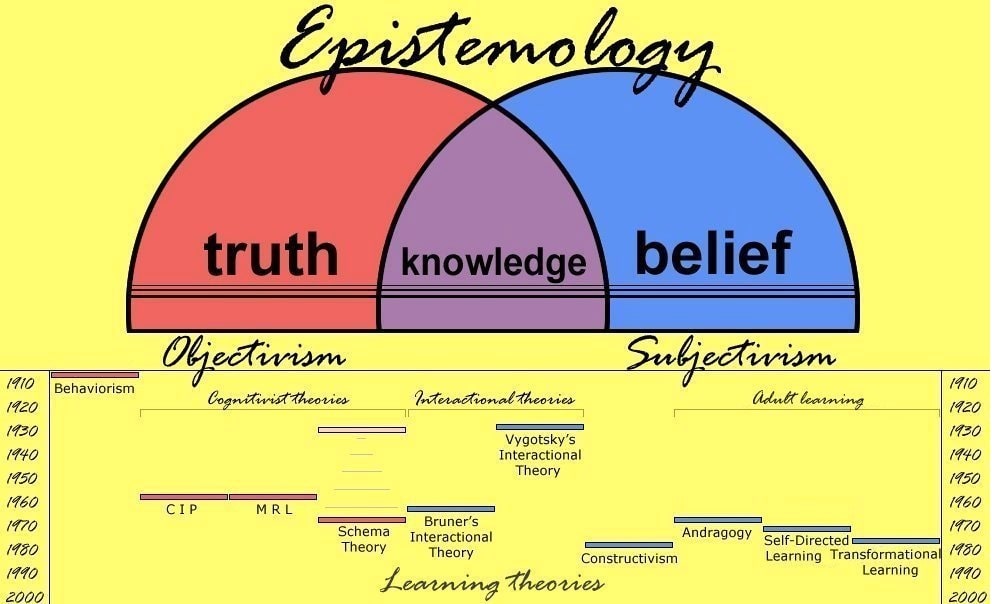
Am I the only one who had to replay these videos a few times back?! And pause it to catch up on my notes?! Even with slowed down playback speeds AND closed captions?! I sure hope not LOL anywho before I go on and spew some possible answers to my potential questions, I wanted to share that I did some brief skimming through other online sources on these paradigms/frameworks and stumbled upon the image that I ended up including above (I will include that it happened to have come from here although I must also preface that the site could be deemed quite sketchy LOL). Nonetheless, not only did it connect to this recent work of ours but it too reminded me of another conversation that is ongoing within another YDEV course of mine (and that being a super interesting and fruitful discourse surrounding what is considered truthful/factual information, the weight that experience/belief carry, and the unintended roles that harm can play when bringing knowledge into a space).

Anywho, my efforts at rounding out and building upon the information learned from the assigned Pat Norman videos didn't end up really helping me determine exactly which ideology I align most with (it actually may have done the opposite LOL). Although if I ~had~ to choose one in this moment, I think I align closer to the ideology of Constructivism. I would say so because of its epistemological belief that knowledge is co-created/built/shared, axiology of humanity/diversity/context in one's identity, and general understanding that the world will forever be much more of a grey area than ever the sole colors of black and white. Next reviewing my list of twenty questions from last week's blogpost, I think some of the answers would look like the following...

Q1: How do I become sure that I am honoring all parts of a young person's intersecting identities at all times?

A1: Looking at this question from the lens of constructivism, I must ensure that cultural and historical context are at the center of posing the question and discovering the answer. Although I don't know the answer- I, too, think that this could be a perfect opportunity for knowledge to be shared and created collaboratively. 

Q2: What are the most effective forms of respite for youth within the 2SLGBTQIA+ community who is facing familial banishment, houselessness, or any other type of life crisis? 

A2: Approaching this from a constructivist perspective, I think the answer/s would be within the process and participants of the research itself. Its underlying values would encourage diversity and humanity throughout every step of the way- and paired with an emphasis placed on how we all understand and make meaning differently, a very wide range of truths could be brought to the surface.

Q3: What are the most prevalent forms of crises and/or coping skills from the perspective of a youth within the 2SLGBTQIA+ community?

A3: If I were to take a constructivist approach, I believe I may answer the above question by delving head first into every identity that is under every letter and doing so with every research approach and method possible. Now I may have to come to terms with my human capabilities putting limitations on the extent of my research/the research's inability to be infinite or all-encompassing (thus potentially leaving out some possible answers, perspectives, meanings, etc.) but I'd certainly shoot for the stars.

I thank you for reading this far and look forward to next week,

Bailee xxxooo

Here's to the rest of our Fall 2025 semester together!🫶🥳✨

First and foremost, I really enjoyed again getting a little peek at capstone proposals from past YDEV-ers and most specifically, would have ...